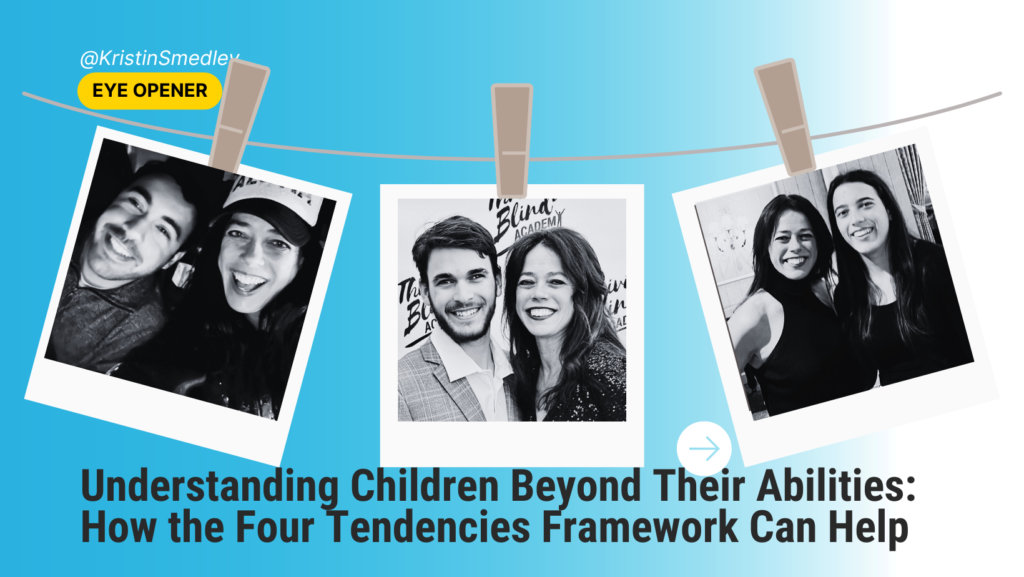
As a mother raising children with disabilities, I’ve spent years focusing on their abilities, challenges, and the support they need to thrive. While these are important aspects of parenting, it’s crucial not to lose sight of the fact that our children are unique individuals with distinct personalities. A recent episode of the Raising Good Humans podcast featuring Gretchen Rubin’s Four Tendencies Framework served as a reminder of how universal personality insights can be—and how vital it is to understand our children as humans first, beyond their disabilities.
What is the Four Tendencies Framework?
Gretchen Rubin’s Four Tendencies Framework helps us understand how people respond to internal and external expectations, offering a new way to connect with our children and support their growth. Here are the four personality types:
Upholders – These individuals meet both internal and external expectations with ease. They thrive with routine and are often self-motivated.
Questioners – They need a reason for every expectation. Children in this group will only follow rules if they find them logical, so explaining “why” is crucial.
Obligers – They are driven by external expectations but may struggle with self-motivation. These children often benefit from external accountability or encouragement to meet personal goals.
Rebels – Rebels resist both internal and external expectations. They prioritize personal freedom and tend to work best when they have a sense of control over their actions.
Why This Matters for Parents of Children with Disabilities
As parents of children with disabilities, we often get wrapped up in addressing their physical, educational, and developmental needs. This framework encourages us to go beyond those practicalities and acknowledge our children’s unique personalities. It’s a reminder to see our children as whole individuals, not just through the lens of their challenges or abilities.
Understanding your child’s tendency can transform the way you communicate, motivate, and support them. For instance, a child who is a Questioner may need detailed explanations for each therapy session or medical procedure to feel more comfortable. On the other hand, a Rebel might respond better to choices and autonomy rather than rigid schedules.
Applying the Four Tendencies in Parenting
Using this framework allows parents to foster better relationships with their children by understanding how they respond to expectations. Here’s how:
For Upholders: Create a structured environment. Upholders appreciate clear expectations and will thrive with consistent routines, especially if they understand the benefits.
For Questioners: Provide logical explanations. These children need to know the “why” behind everything. When you explain how a certain therapy or exercise benefits them, they’re more likely to engage.
For Obligers: Focus on external accountability. Whether it’s a teacher, therapist, or even a sibling, external motivation works best. Setting up a system where they feel responsible for someone else’s expectations will help them meet goals.
For Rebels: Give them choices. Rebels want to feel in control, so offer them options. Let them decide when or how to complete a task, like which therapy session to start with or what exercises they prefer.
Seeing the Whole Child
This framework reminds us that every child is more than their disability. As parents, we must balance addressing their specific needs with honoring their unique personalities. Applying the Four Tendencies not only helps us manage day-to-day challenges but also deepens our connection with our children by recognizing their human tendencies.
For children with disabilities, this approach is especially powerful. By focusing on how they respond to expectations—rather than simply pushing them to meet those expectations—we can build a supportive, empowering environment where they feel seen, heard, and valued.
Conclusion: A Universal Framework
The Four Tendencies Framework is universal and offers a fresh perspective on parenting. It allows us to better understand our children’s behaviors and motivations, helping us guide them in ways that work best for their unique personalities.
For parents like me, raising children with disabilities, it’s a valuable reminder to see our kids as individuals first—people who happen to need extra support in certain areas. By incorporating this framework into our parenting, we can create more harmonious relationships and help our children thrive, not just as individuals with disabilities, but as whole humans.
Want to dive deeper? Listen to the full podcast episode here: The Four Tendencies Framework and How We Respond to Expectations.