
The Look Again Series
Look Again: How to SEE Differently and Change What’s Possible
The first story you see is not always the whole truth. Look Again is Kristin Smedley’s framework for interrupting that first story, testing it against the evidence and taking the action that changes what becomes possible, at work, at school and at home.
Signature keynote·Weekly video series·The Tuesday Look Again Letter
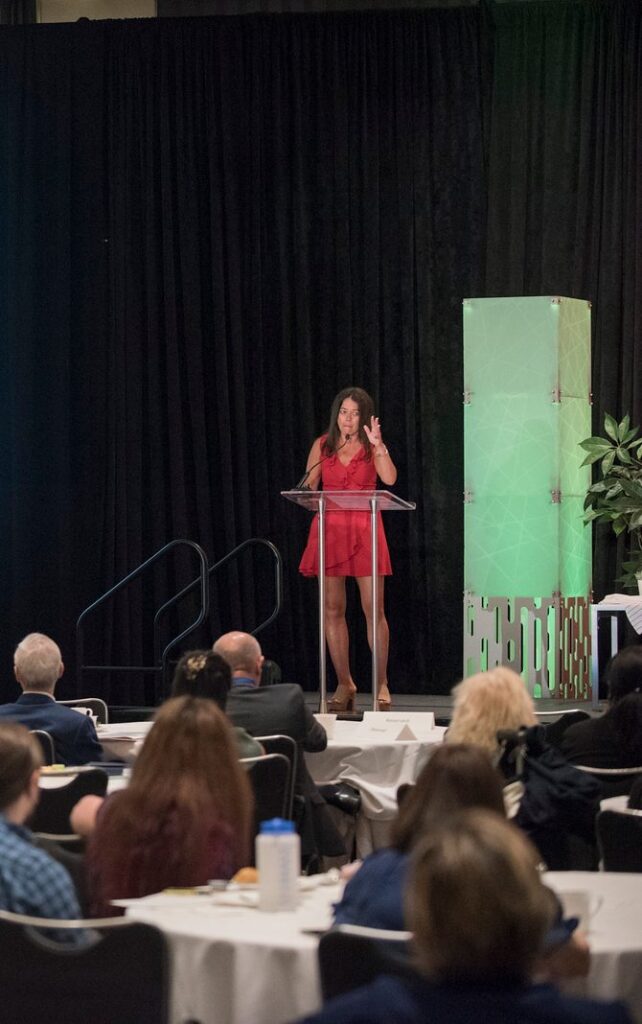

Where It Started
What Is Look Again?
When Kristin Smedley’s two sons were diagnosed as blind, the only story her mind could find was a sad one. She had grown up watching Little House on the Prairie, where blindness meant loss. So when her boys picked up white canes, she saw limitation.
Then her three-and-a-half-year-old son Michael announced it was “the best day ever,” while she was still living inside the devastation story. He interrupted it. By age six he knew all about Erik Weihenmayer, the first blind person to summit Mount Everest, and that story gave him possibility instead.
The cane never changed. Kristin’s perspective did. And that changed what she expected, what she pursued and what became possible for her family. Look Again is the practice she built from that moment: interrupt the first story, examine the evidence and discover what else may be true.
“A fact can be true without being the whole truth.”
The Framework
The Look Again™ Framework in Four Steps
Every episode, keynote and workshop follows the same four steps. They work on a life-changing diagnosis, and they work on a Tuesday afternoon that went sideways.
- Step 1
The First Look
Notice the first interpretation, the story your mind created in the moment.
- Step 2
Why We See It That Way
Past experience, fear, culture, assumptions and expectations shape what we notice and what we believe it means.
- Step 3
Look Again and SEE Differently
Examine the story, test it against the evidence and ask what else may be true.
- Step 4
Act Differently
Choose one action that tests the more complete perspective and creates new evidence.
Look Again is the first reachable step. The THRIVE Code™ is how people keep moving.
The Research
Why We See What We See
Look Again is grounded in decades of psychology and neuroscience research on how the brain builds meaning after the unexpected, and how people move forward when the old story no longer fits.
Each episode of the series explores one piece of this research in plain language, alongside voices many audiences already know, like Brené Brown’s work on “the story I’m making up” and Erik Weihenmayer’s climb to the top of Everest.
Schema Theory
Frederic Bartlett · Jean PiagetThe brain makes sense of new information by matching it to stories and mental models it already has. When something unexpected happens, the mind reaches for the closest file it can find, even when that file is wrong.
Shattered Assumptions
Ronnie Janoff-BulmanMajor life events can break the basic beliefs we hold about the world, about fairness and about ourselves. Rebuilding those beliefs is part of moving forward.
The Meaning-Making Model
Crystal ParkWhen what happens does not fit what we believe, we feel distress until we find meaning, either by changing how we see the event or by changing what we believe.
Cognitive Reappraisal
James GrossChanging how we interpret a situation changes how we feel and respond to it. Reappraisal is one of the most effective ways people regulate emotion.
Narrative Therapy
Michael White · David EpstonThe stories we tell about our lives shape our lives. Noticing “unique outcomes” that do not fit the problem story opens the door to re-authoring a new one.
Post-Traumatic Growth
Richard Tedeschi · Lawrence CalhounMany people report real growth after hard events, including new possibilities, deeper relationships and a stronger sense of what they can handle.
Use It Every Day
Not Just for Life’s Biggest Curveballs
Look Again is a tool people can use many times a day: in a boardroom, in a classroom, in a doctor’s office and at the kitchen table.
At Work
First look: A strong candidate walks into the interview with a white cane, and the interviewer quietly lowers expectations.
Look again: What has this person already accomplished, and what could they bring that the team is missing? Kristin calls that moment of default thinking the blind spot.
In Healthcare
First look: A diagnosis arrives with a prognosis, and the family hears only what will be lost.
Look again: What do patients and families know that the chart doesn’t? What becomes possible when they are treated as partners?
At Home and at School
First look: The schedule falls apart, or a child struggles, and the day feels ruined.
Look again: What did this disruption just open up, and what is one small action that creates new evidence?
The Series
Watch and Read the Look Again Episodes
Each episode is a 10-minute video with a companion article, published every week. Each one follows the same arc, so you can take the idea straight into your own week.
- First Look
- The Research
- Look Again
- New Action
The first episodes are publishing now.
Sign up for the Tuesday Look Again Letter below to get each new episode as soon as it’s out, or watch on YouTube (opens in a new tab).
For Event Planners
Bring Look Again to Your Organization
Kristin delivers Look Again as a keynote, a workshop or a fireside chat. She combines deeply human stories, accessible research and a practical framework, customized for the people in your room.
Leaders, Teams and Associations
Navigating change, challenging assumptions and recognizing overlooked talent and ideas.
Healthcare, Life Sciences and Rare Disease
Patient voice, the stories attached to diagnoses and seeing patients as partners.
Educators and School Systems
How expectations become student experiences, and how access builds confidence.
ERG, BRG and Belonging
Disability inclusion, access and building cultures where everyone can contribute.
Keynote·Workshop·Fireside chat·In person or virtual
Questions
Look Again: Frequently Asked Questions
What is Look Again?
Look Again is a practical framework created by keynote speaker and author Kristin Smedley. It helps people notice the first story their mind tells about a disruption, a diagnosis, a setback or another person, test that story against the evidence, and choose an action that creates new evidence. Its core idea: a fact can be true without being the whole truth.
Who created the Look Again framework?
Kristin Smedley, a TEDx speaker, bestselling author of Thriving Blind, and Founder of the Curing Retinal Blindness Foundation and Thriving Blind Academy. She developed Look Again from raising two sons who are blind and from more than a decade of work with families, educators, researchers and industry leaders.
Is Look Again only about blindness or disability?
No. Blindness is where Kristin learned it, but Look Again applies to any moment when the first interpretation is incomplete: organizational change, hiring and overlooked talent, a medical diagnosis, a student’s potential, a setback at home, or a schedule that suddenly falls apart.
What research is Look Again based on?
Look Again draws on schema theory (Bartlett and Piaget), shattered assumptions (Ronnie Janoff-Bulman), the meaning-making model (Crystal Park), cognitive reappraisal (James Gross), narrative therapy (Michael White and David Epston) and post-traumatic growth (Richard Tedeschi and Lawrence Calhoun).
Who is the Look Again keynote for?
Corporate leaders and teams, associations and conferences, healthcare, life sciences and rare disease organizations, educators and school systems, and ERG, BRG and belonging audiences. Kristin customizes each keynote for the people in the room.
How do I book Kristin Smedley to speak about Look Again?
Email team@kristinsmedley.com or visit the Speaking page to check availability. Look Again is available as a keynote, a workshop or a fireside chat, in person or virtually.
Every Tuesday
Get the Look Again Letter
Each Tuesday, Kristin sends one new Look Again episode, the research behind it and one question to carry into your week. Join more than 2,400 readers.
Prefer video? Subscribe on YouTube (opens in a new tab).