I remember standing in our kitchen watching my son try to pour his own milk.
He was little, barely tall enough to see over the counter. The gallon jug wobbled in his small hands. I could see the spill coming before it happened. And every instinct in me screamed, Grab it. Fix it. Do it for him.
After all, he was blind. Wouldn’t it just be easier?
But what I’ve learned after decades of parenting and coaching families raising a child with a disability is this: Every time we rush in to rescue, we quietly whisper, “I don’t think you can.”
So I stood still. Milk spilled. He adjusted. He tried again.
And when he finally poured it into his cup – crooked, messy, triumphant – his smile said everything. That wasn’t about milk. That was about confidence.
Confidence Isn’t a Personality Trait, It’s a Skill
Many parents ask me, “How do I build confidence in my child with a disability?”
Confidence doesn’t come from praise alone. It comes from competence.
Psychologist Albert Bandura, known for his work on self-efficacy, explains that children build belief in themselves through mastery experiences—actually doing hard things and succeeding. Not being protected from difficulty. Not being told they’re amazing. But doing. Trying. Adjusting. Growing.
In other words:
Tools → Competence → Confidence → Thriving
They’re interdependent. You can’t separate them. When we give children the right tools—whether that’s orientation and mobility skills, adaptive strategies, emotional language, or problem-solving frameworks, they begin to trust themselves.
And trust is the foundation of thriving.
What I’ve Learned Coaching Hundreds of Parents
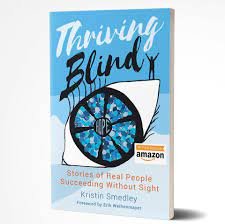
Through my work coaching parents of children living with vision loss – and through programs at the nonprofit I co-founded, Thriving Blind Academy – I’ve seen a pattern over and over again.
The families who see the biggest transformation aren’t the ones with the most resources. They’re the ones who shift from:
“How do I protect my child?”
to“How do I equip my child?”
At Thriving Blind Academy, we work with children to develop real-world skills – independence, self-advocacy, resilience. But just as importantly, we work with parents to adjust expectations.
If we don’t believe our kids can learn the skill, we won’t give them the tool. And without the tool, confidence can’t grow.
Why Ages 5–7 Are a Confidence Sweet Spot
If you’re parenting a 5–7 year old with a disability, you are in a critical window. At this age, children are asking:
“Am I capable?”
“Do I belong?”
“Can I figure things out?”
Developmental psychologist Erik Erikson called this stage “Industry vs. Inferiority.” Children are forming their sense of competence. When they’re given opportunities to try, fail, and succeed, they develop industry—a belief in their ability to create and contribute.
When they’re over-helped or underestimated, they develop doubt.
That’s why early childhood disability parenting requires intentionality. It’s not about pushing kids beyond their limits. It’s about refusing to cap their potential.
Tools Look Different for Every Child
Tools aren’t one-size-fits-all. For a child with vision loss, tools might include:
Learning tactile markers in the home
Using a white cane confidently
Developing spatial awareness through structured play
Practicing self-advocacy language like, “Can you describe that for me?”
For another child with a different disability, tools may look different, but the principle remains the same. Tools create access. Access builds competence. Competence fuels confidence.
And confidence? That’s where thriving begins.
The Leadership Role We Don’t Talk About Enough
Here’s where I’m going to gently challenge you. If you want to raise a confident child with a disability, you must lead differently. Leadership in parenting doesn’t mean controlling outcomes. It means creating conditions for growth.
It means:
Expecting participation, not perfection
Valuing effort over ease
Celebrating progress, not comparison
Holding steady when things feel uncomfortable
When my sons were young, I had to ask myself daily:
“Am I stepping in because he truly needs support or because I’m uncomfortable watching him struggle?” That question changed everything.
Confidence and Thriving: A Two-Way Street
Earlier in this series, we talked about mindset. Seeing differently.
Now we’re layering in something new:
Confidence is both the result of thriving and the engine that drives it. When a child feels confident:
They take more risks.
They try new strategies.
They advocate for themselves.
They recover faster from setbacks.
And each of those experiences reinforces their identity as capable. That’s why confidence isn’t fluff. It’s foundational.
We’ll explore this more deeply in a future post, but for now, I want you to begin noticing something:
Where could your child use one more tool?
Not rescue. Not reassurance. A tool.
Practical Takeaways You Can Start Today
Let’s make this tangible. Here are three ways to start building confidence in your 5–7 year old this week:
1. Replace “Let me help you” with “What’s your plan?”
Instead of jumping in, ask a guiding question. This promotes problem-solving.
2. Normalize Struggle
Say things like:
“It’s okay that this is hard.”
“Your brain is growing right now.”
This reinforces growth mindset research from Dr. Carol Dweck, who found that praising effort over innate ability increases resilience.
3. Create One Independence Ritual
Choose one daily task your child owns completely: packing their backpack, setting the table, organizing their toys. Let it be messy. Let it be imperfect. Let it be theirs. Small reps build big confidence.
A New Tool I’m Creating (And I Need Your Help)
After years of working with parents of young children, I kept hearing the same thing:
“I want something practical we can do together at home.”
So I created something simple, intentional, and powerful:
The 5-Day Confidence Kick Start Journal
A guided parent/child activity designed specifically for ages 5–7. It’s short. It’s doable. It builds tools and confidence—together.
And because this is brand new, I’m looking for 20 committed beta testers who are willing to try it and give honest feedback.
If you’re raising a child with a disability and you want to intentionally build confidence in these early years, I would love for you to apply.
👉 Apply to be a beta tester here (only 20 spots available):
https://docs.google.com/forms/d/e/1FAIpQLSeQ-gk0fQWevXRAUwwaH6_0xl60RQ2V0Z5g7TdMpNyBjkr-bg/viewform?usp=dialog
Moving Forward Together
If no one has told you this lately:
You don’t have to lower expectations to be compassionate. You don’t have to rescue to be loving. And you don’t have to have it all figured out to lead well.
Start with one tool. Let competence grow. Watch confidence rise.
That’s how we raise thrivers – because thriving isn’t accidental. It’s intentional.
Kristin Smedley is a former elementary teacher turned author and advocate for the blind and disability community. She’s the mom of three children—two of whom were born blind—and all are thriving. To bring Kristin to your classroom, organization, or conference for an in-person or virtual experience, contact ThrivingBlind@gmail.com.